
Why the MPC1000 Still Holds Up: A Casual Deep‑Dive
Why the MPC1000 Still Holds Up: A Casual Deep‑Dive
SAMPLERS
2/4/20263 min read
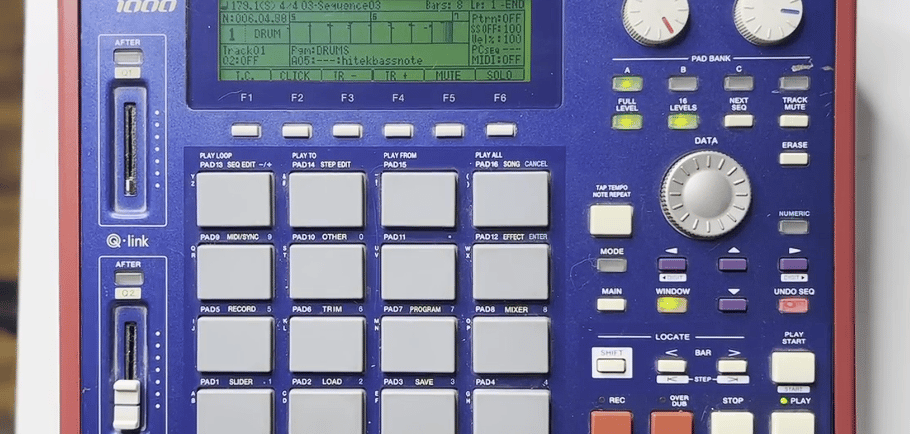
The MPC1000 dropped in the early 2000s, right around 2003–2005, and it was Akai’s attempt to shrink the classic MPC workflow into something more portable. Even with the smaller footprint, it came packed with pretty much everything you’d want in a groovebox or sampler. In a lot of ways, it pushed the original MPC concepts forward rather than watering them down.
Compact, Capable, and Surprisingly Expandable
Out of the box, the MPC1000 shipped with 16MB of RAM, but you can bump it up to 128MB. Storage-wise, it uses CompactFlash cards, and while the official limit is 2GB, there are workarounds—like using a Type I CF adapter with a larger Type II card. People have successfully run 16GB cards without issues.
If you want internal storage, you can even install a hard drive using the optional kit. It requires opening the front and top panels, but once you do, there’s a spot for a drive chassis right next to the CF reader.
On the connectivity side, you get six outputs (including stereo), multiple MIDI ports, and enough routing flexibility to control a whole table of synths if you want.
The Most Mod‑Friendly MPC Ever?
One of the reasons the MPC1000 has stayed so popular is how easy it is to modify. Sites like MPCstuff carry a huge range of replacement parts and upgrades—panels, buttons, pads, screens, you name it. Compared to the massive MPC4000 or the older 2000 series, the 1000 is just easier to work on and easier to carry around.
There are two main versions: the original red/blue model and the later all‑black version. The biggest difference is the pad design. The early units used individual pad sensors, and those tend to fail over time. If you’re buying one used, assume you’ll eventually need the pad upgrade. It’s not cheap (around $200), but it’s worth it, and the newer pad sheet feels way better.
JJOS: The Upgrade That Changes Everything
If you pick up an MPC1000, the smartest upgrade you can make isn’t physical—it’s JJOS. It’s a custom operating system built by one of the original Akai developers, and it transforms the machine.
You get:
A proper grid view for sequencing
Better sample editing
More mixer control
Tons of workflow improvements
Once you use JJOS, going back to the stock OS feels impossible.
A Hands‑On Machine That’s Still Fun Today
The MPC1000 hits a sweet spot: it feels like a classic drum machine, but it has enough modern features to keep things interesting. Everything is tactile. Everything has a purpose. And if you’re tired of staring at a computer all day, this thing is a breath of fresh air.
It’s small enough to sit on a desk or even your lap. Plug in headphones, sample a few records, tweak envelopes, make weird loops—it’s the kind of machine that invites experimentation.
It also pairs beautifully with other gear. An SP‑404 and an MPC1000 together is pure chaos in the best way. And JJOS makes loop capture genuinely great.
Price, Durability, and Why Now Is a Good Time to Buy
The MPC1000 hasn’t hit “vintage tax” territory yet. You can still find them for around $350–$400, especially the older blue models that need pad upgrades. Considering what it can do, that’s a steal.
It’s also built like a tank. The chassis is metal, and replacement side panels are cheap if you ever crack one. Compared to newer MPCs—which use more plastic—the 1000 feels like it was made to survive being tossed in a backpack.
Final Thoughts
I’m not claiming to be an authority on MPCs, but if you stumble across a 1000 at a good price, it’s absolutely worth grabbing. It’s versatile, fun, easy to mod, and still fits into modern studio setups without feeling outdated.
If you’re curious about repairs, upgrades, or what the inside looks like, there’s a whole world of mods and walkthroughs out there—and plenty of people happy to share their process.
